
List of Applications
List of Applications for Mattituck-Laurel
- Mattituck Hotel 122.-6-22.1 B
- Cardinale Retail Buildings 122.-3.9 B
- 615 Pike Street Retail Units 140.-2-21 HB
- Handy Pantry Multi-Family Building 114.-12-3.1 HB
- Mattituck Contractors Campus 122.6-35.7 B
- Mattituck Gas Station & Convenience Store 122.-7-3.2
- Mattituck Plaza
- Old Sound Winery
- Strongs Storage Buildings 166.-6-13.4 M11&R-80
Example Project
| Project Name: | RC Church of The Sacred Heart Parish Center | SCTM#: | 1000-114.-11-1 |
| Location: | 14300 NYS Route 25, Mattituck | ||
| Description: | This site plan is for the proposed creation of a 10,528-sq. ft. parish center on the R-40 zoned portion of a 5.6-acre split-zoned parcel, with ±3.0 acres in the RO District and ±2.6 acres in the R-40 District, Mattituck. The parcel includes an existing one-story church with walkways and parking area, along with an existing residence. | ||
| Status: | New Application | ||
| Action: | Review for Completeness | ||
| Attachments: | Staff Report | ||
Note: This project has been approved and is in construction. The data above is from the Monday September 9, 2024 Work Session Agenda.
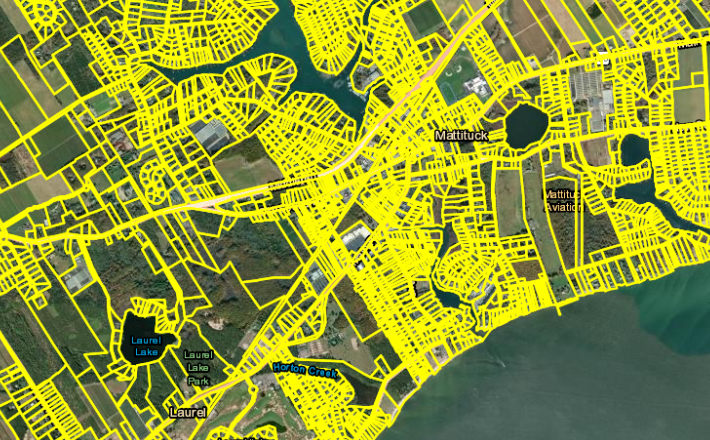
Search with tax parcel number or address
In the search bar type in the tax parcel number, ex. 1000-114.-11-2 press the enter key or click on the magnifying glass to search.
Or enter in the address, ex. 13900 Main Road, Mattituck, NY, 11952.
Tax parcel number can be found on the planning board work session agenda as SCTM# (Suffolk County Tax Map Number)
Zoning
Town zoning determines how land can be used within a community. It establishes designated areas for residential, commercial, agricultural, and other uses, and sets standards for things like building size, placement, and density. These regulations help guide development, protect neighborhood character, and ensure that growth is orderly, safe, and aligned with the community’s long-term plans.
General Business (B)
Permitted Uses
- Agriculture
- Antique Shop
- Art Gallery
- Auction Gallery
- Auditorium
- Bake Shops (for on premise retail sale)
- Baking Facility
- Banks
- B&B
- Beverage Distribution Retail
- Beverage Distribution Wholesale
- Boarding House
- Building Material Storage & Sale
- Bus Station
- Cinema
- Cold Storage Plant
- Electrical & Plumbing
- Convenience Stores
- Dwelling, Multiple
- Dwelling, 1-Family Detached (owner occupied required in certain zones)
- Dwelling, 2-Family (owner occupied required in certain zones)
- Financial Institutions
- Food Processing or Packing plant
- Funeral homes
- Garden Center
- Garden Materials, Plants & Supplies Wholesale
- Grocery Store (less than 25,000 sq ft)
- Laundromat
- Library
- Meeting Hall
- Museum
- Nursery
- Office, Business, Govt., Professional
- Personal Service Stores, Shops (Barber, Beauty, Travel Agencies, etc.)
- Public Structures & Uses (Town, Fire, School, Park District)
- Repair Shop: Household, Business or Personal Appliances including Cabinet Shops, Carpenter Shops, Electrical Shops, Plumbing Shops, Furniture Repair Shops, Bicycle and Motor shops
- Restaurants (Excluding Formula Food and Take Out)
- Retail (less than 8000 sq ft)
- Telephone Exchanges
- Warehousing, Private & Public
- Wholesale Businesses
- Wineries (wines produced and with 10-acre Agriculture in R Zones) ( LB, LI, B Zones: Produce the wine there, but no 10 acre requirement, no vineyard required)
- Workshop Custom
Exceptions
- Carwash
- Cemeteries
- Children’s Recreation Camps (primarily seasonal use)
- Clubs, Annual Membership Clubs, Country Clubs ( Beach, tennis, golf), 3-acre minimum lot size.
- Continued Care/Life Facilities (nursing home)
- Drinking Establishments
- Dry Cleaners
- Farm Labor Camps
- Flea Markets
- Fraternal/Social Offices or Meeting Halls
- Gas Station
- Gasoline Service Stations
- Health Care (in A-C/R40/HB/B/RO: Excluding Facilities for the Treatment Drug Addiction)
- Hotels Resort & Transient
- Laboratory, Research, Design & Development
- Laundry Plant
- Motels
- Philanthropic or Religious Institutions
- Places of Worship
- Public Garages
- Public Utility Right of Ways/Structures
- Recreation Facility, Commercial (must be enclosed, tennis, club, dance hall, billiard hall, bowling alley, health spas)
- Restaurants Formula Food & Take Out
- Retail (8000 to 15,000 sq ft floor area)
- Schools, Nursery
- Schools Private (non-profit, 5 + acres)
- Stables and Riding Academies
- Transportation Service, Private Truck Terminal (Garage, Parking, Loading Docks)
- Vehicle Sales & Rental (Auto, RV, Trailers, Boats) Including Accessory Repair
- Veterinarian & Animal Hospital
Hamlet Business (HB)
Permitted Uses
- Antique Shop
- Art Gallery
- Auction Gallery
- Auditorium
- Bake Shops (on premise retail sale)
- Banks
- B&B
- Boarding House
- Bus Station
- Cinema
- Convenience Stores
- Dwelling, 1-family detached (owner occupied required in certain zones) ( M1 & M2 zones only if the parcel was in existence as of 1989)
- Dwellings, multiple
- Financial Institutions
- Grocery Stores (less than 25,000 sq ft)
- Laundromat
- Library
- Meeting Hall
- Museum
- Offices, Business
- Offices, Professional
- Personal Service Stores & Shops (Barber, beauty, travel agency, photography)
- Public Structures and Uses (Town, Fire, School, Park District)
- Repair Shop: Household, Business or Personal Appliances including Cabinet Shops, Carpenter Shops, Electrical Shops, Plumbing Shops, Furniture Repair Shops, Bicycle and Motorcycle Repair Shops)
- Restaurants (excluding formula food and takeout)
- Retail (less than 6000 sq ft)
- Theater
- Tourist Home
- Train Station
- Work Shop (Craftsman Studio or Artist, Custom)
Exceptions
- Accessory Apartment in existing detached accessory building
- Drinking Establishments
- Flea Markets
- Fraternal or Social Institutional Offices or Meeting Halls
- Funeral Homes
- Health Care (Excluding Facilities for Treatment of Drug Addiction)
- Hotels, Resort, Transient
- Motels
- Philanthropic or Religious Institutions
- Public Garages
- Public Utility Right of Ways/Structures
- Restaurants Formula Food
- Retail (6000sq ft to 12,000 sq ft)
- Schools, nursery
- Schools Private (non-profit) (5 + acres)
Accessory Uses
- Accessory Apt in Principal Building (Up to 3, less than 50% of principal building)
- Accessory Residential Structures (sheds, pool, tennis court)
- Boat Docking non-commercial
- Boat Storage for personal use rear yard only
- Convenience Store accessory to pre-existing gas station in HB
- Private Garage
- Home Occupation
Planning Board
1st & 3rd Mondays of the month
1st Monday 4pm - 5pm (work session)
1st Monday 5pm - 7pm (public meeting)
Click here for updates and changes to meeting dates, times or location.
Upcoming & past Planning Board Meeting & Planning Board Work Session Agendas
Town Board
1st & 3rd Tuesdays of the month from 6pm - 7pm
Click here for updates and changes to meeting dates, times or location.
Upcoming & past Town Board Meeting & Town Board Work Session Agendas & Minutes
Zoning Board of Appeals
1st Thursdays of the month from 9am - 2pm
Click here for updates and changes to meeting dates, times or location.
Work Sessions
What Is a Work Session?
A Town Board or Planning Board work session is a meeting where board members come together to review information, discuss upcoming agenda items, and prepare for future decisions.
Work sessions are typically less formal than regular public meetings. They are used to:
- Review proposals, applications, or development plans
- Ask questions of staff, consultants, or applicants
- Discuss policy ideas or project details
- Clarify information before formal action is taken
No final votes or official decisions are usually made during a work session.
Is the Public Allowed to Participate?
Work sessions are generally open to the public to observe, but they are not designed for public comment or participation.
This means:
- There is no public expression or comment period
- The public may attend and listen, but cannot speak or provide input during the session
- Discussion is limited to board members, staff, and invited presenters
Public Meetings
What Is a Public Meeting?
A Town Board or Planning Board public meeting is a formal, open meeting where board members conduct official business, discuss agenda items, and make decisions.
These meetings follow a structured agenda and are where the board:
- Reviews and discusses proposals, resolutions, or applications
- Takes formal votes and official actions
- Receives reports from staff, consultants, or committees
- Addresses community matters and ongoing projects
Public meetings are the primary setting where decisions that impact the community are made.
Is the Public Allowed to Participate?
Yes. Public meetings typically include opportunities for public expression or comment.
This means:
- There is usually a designated public comment period
- Residents may speak on agenda items or general community concerns (depending on meeting rules)
- Comments are typically time-limited to ensure all who wish to speak have an opportunity
Participation guidelines—such as sign-in procedures or time limits—may vary.
What About Public Hearings?
Some public meetings include public hearings, which are focused on specific topics such as:
- Development applications
- Zoning changes
- Policy proposals
During a public hearing:
- The public is invited to provide input specifically on that item
- Comments become part of the official record
- The board may ask questions or request additional information before making a decision
Communicate
This section is designed to help residents effectively communicate with the town about local projects and decisions. Whether you’re speaking at a public hearing, sharing your perspective during a public comment period, or submitting feedback by letter or email, you’ll find clear guidance on how and when to engage. We also provide sample templates to support thoughtful, well-structured communication, making it easier to have your voice heard in the decision-making process.
Elements of a Letter
- Identify the project with the tax map number
- Self-address
- Vested Interest
- Identify Issue or Issues
- Things to consider
- Close with questions and requests
Ask for a written response
Project ID / Tax Map Number: This is the most important part for the clerk. It ensures your letter is filed with the correct case or property file.
Self-Identification: State your name and full home address clearly at the top.
Vested Interest: Explain why you care. Are you an immediate neighbor? A local business owner? A frequent user of the road in question? This establishes your "standing."
Identify Issues: Use bullet points if there are multiple concerns (e.g., noise, traffic, drainage).
Things to Consider: This is where you offer local insight the board might lack, such as "this intersection floods every spring" or "this street is a school bus route."
Closing Requests: Be specific. Instead of "do something," ask for "a 10-foot sound barrier" or "a formal traffic study."
Request for Response: Explicitly ask for your letter to be included in the public record and request a written reply to your specific questions.
Pro-tip: Keep it professional and unemotional. Town boards tend to give more weight to letters that stick to the facts and local code rather than personal grievances.
Letter Template
Southold Town Government Contact Information
Town Clerk - Denis Noncarrow - 631-765-1800 - denisn@southoldtown.gov
Town Supervisor - Al Krupski - 631-765-1889 - al.krupski@town.southold.ny.us
Town Building Inspector - 631-765-1802 - mike.verity@town.southold.ny.us
Town Planning Director - Heather Lanza - 631-765-1938 - heather.lanza@town.southold.ny.us
Town Zoning Board of Appeals - Leslie Weisman, Chairperson - 631-765-1809

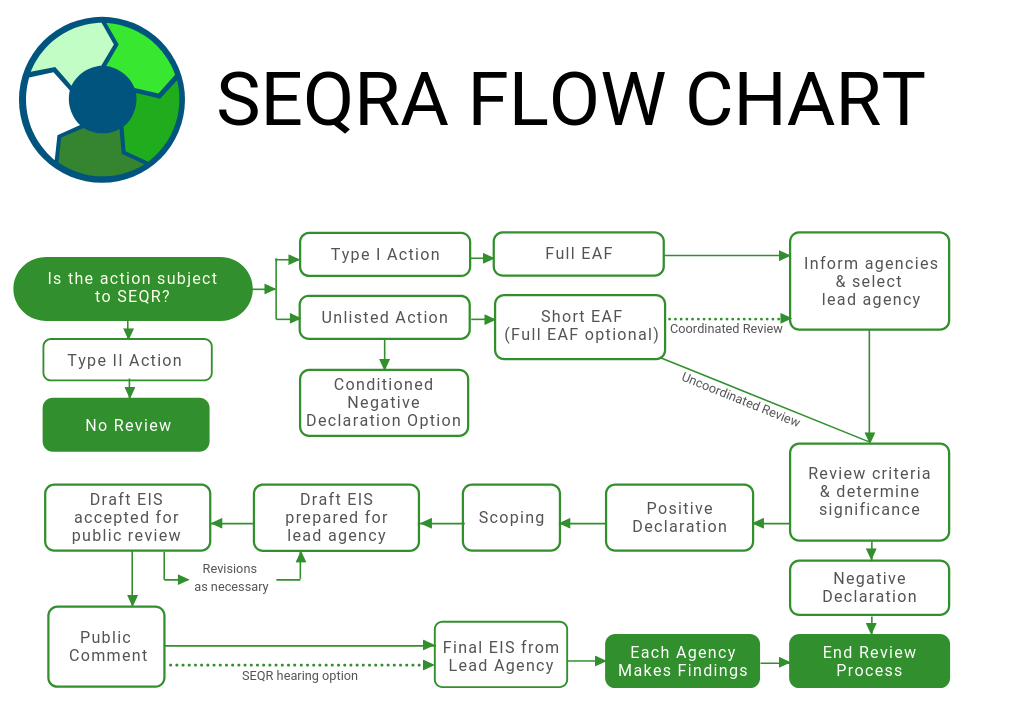
The State Environmental Quality Review Act (SEQRA)
The State Environmental Quality Review Act (SEQRA) is a New York law that makes sure government agencies think carefully about how a project might affect the environment, the community, and the economy before making a decision.
Resources
Credit: ELLA
Acknowledgements
We extend our thanks to the Town of Southold for hosting the information featured on this page and making it accessible to the community.
We also thank Mary Eisenstein for her vision, steady guidance, and the dedicated work involved in compiling this resource guide.
Contact
This resource is provided for informational purposes only. The Library does not take positions on specific projects or issues.
If you have questions about the information on this page, notice anything that may be inaccurate, or encounter a broken link, we’d appreciate hearing from you. Please contact the Library Director, Shauna Scholl (shauna.scholl@mattlibrary.org) so we can review and update the content as needed.